In the novel adaptations of The King and I, Rama IV and Anna exist as the “others” with mutual curiosities. Yet, the Western flamboyant fantasy of the King has triggered a lasting ban in Thailand. While Siam adopted an image of modernity to survive colonial threats, the West, with its casual cruelty of empire, portrayed it as barbaric, betraying the original intention of openness towards one another. Two realities contradict one another; the performed lord is moody and dashing, while Siamese history revered this idol as an intellectual. Yet the truth of the King’s character remains elusive, as palace law historically prohibited commoners from gazing upon royalty. In a land as dramaturgic as a theatre, a foreign object such as the mercury ball, offering an all-seeing sight, becomes a peculiar gift in a court ruled by forbidden scenes. Rather than a singular truth, this gazing sphere reflects a constellation of fragmented realities. Here, time does not run in a straight line but moves like a looking glass: circular, reflected, and distorted.
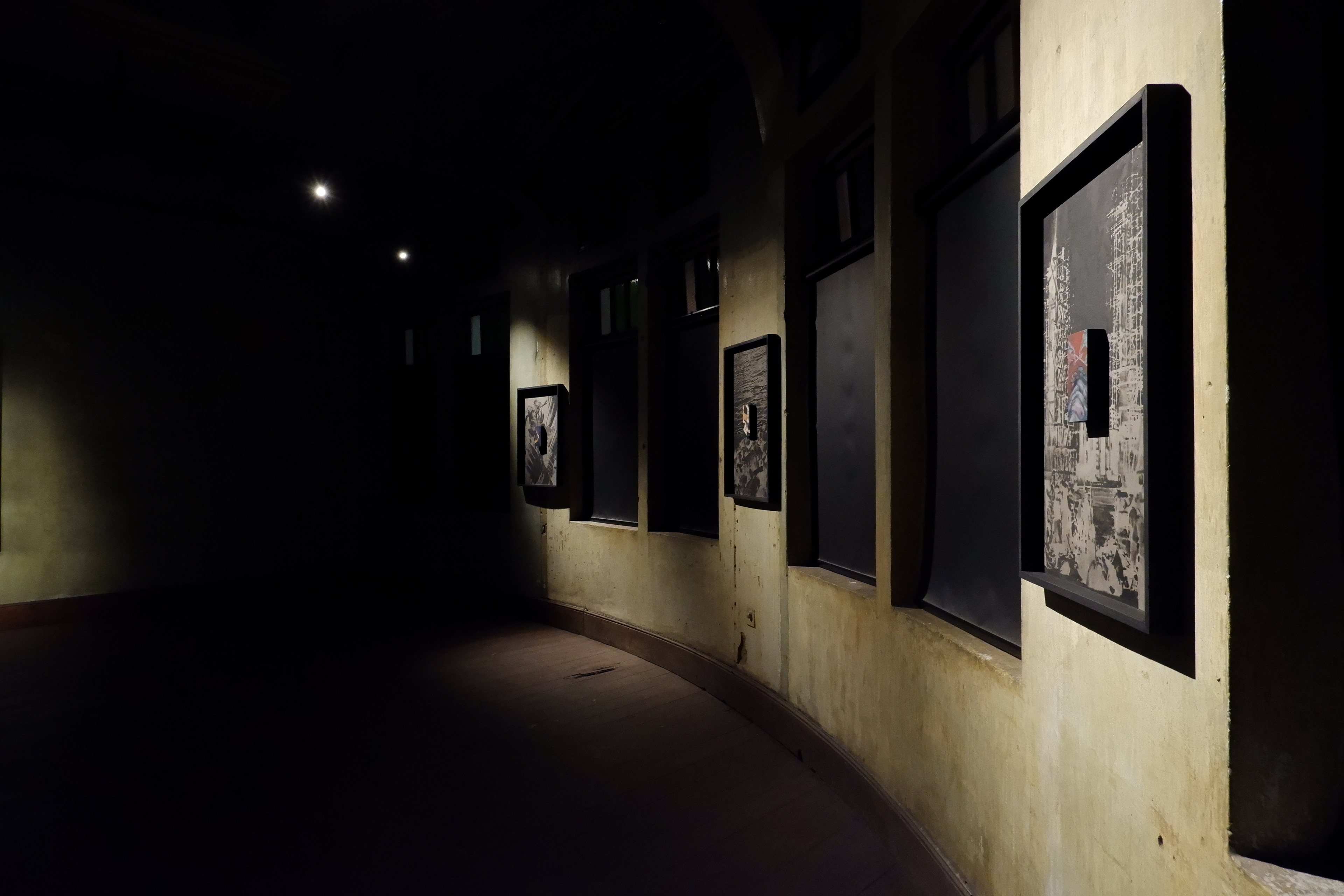
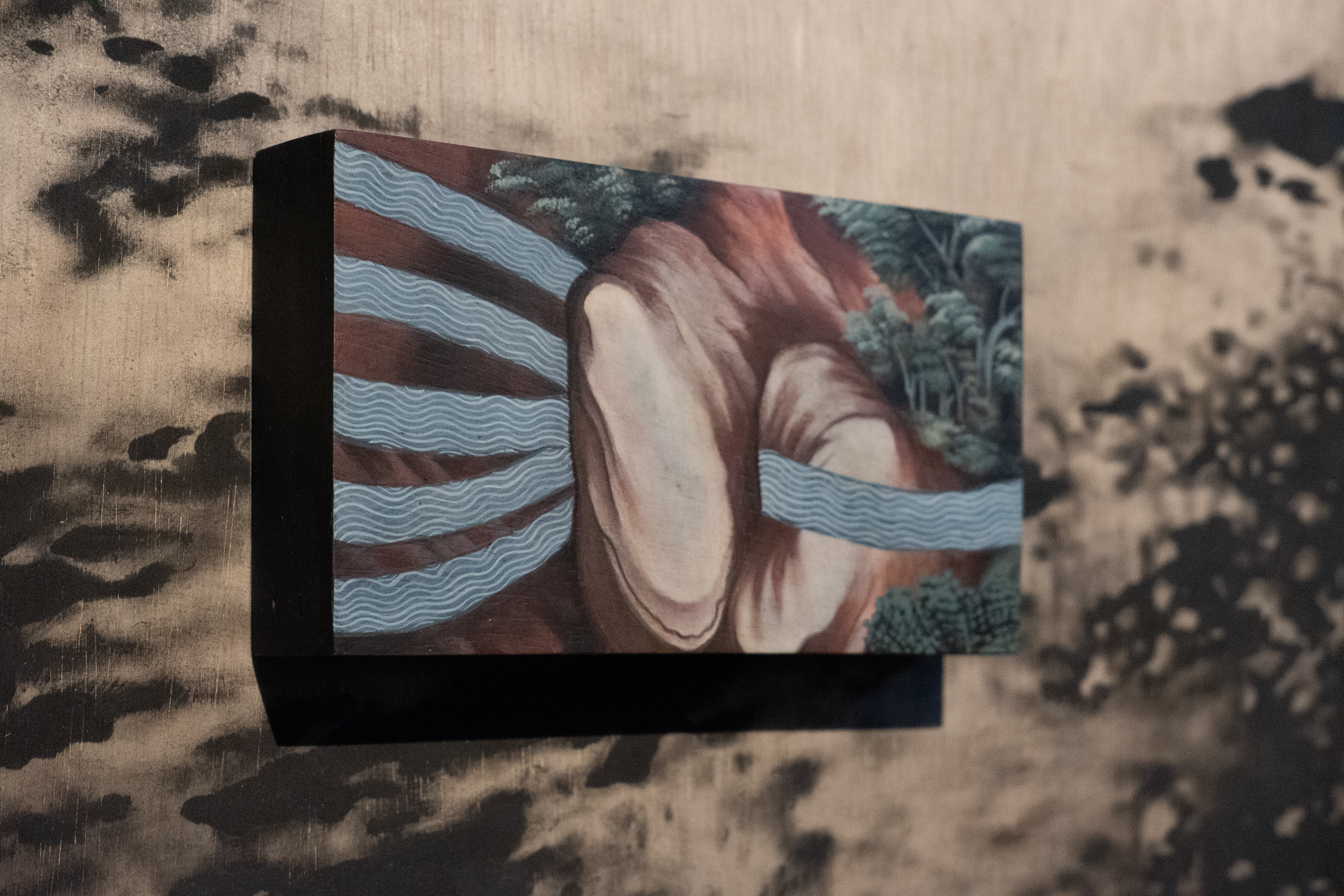
In Sirawit Chatu’s exhibition, Gentle Ghosts with Eyes as Fair, this blinded past haunts the distorted present. The pretended king’s flesh eyes meet a mechanical lens, projecting this imperial caricature globally, except in the nation frozen in its cinematic framing. While the outsider’s fair blue eyes fail to comprehend the other, the subjects shut their curtains, blocking reconciliation. Yet, stillness hides movement, like a looking glass; subtle changes occur if one looks closely into the sphere, away from the velvet shroud of colonial eyes. Perhaps, in this circular prism, the ghost may reveal a much more rounded character, unflattened by any agency, and more humane than the human they once were.
Excerpt from text by Pearamon Tulavardhana
In Sirawit Chatu’s exhibition, Gentle Ghosts with Eyes as Fair, this blinded past haunts the distorted present. The pretended king’s flesh eyes meet a mechanical lens, projecting this imperial caricature globally, except in the nation frozen in its cinematic framing. While the outsider’s fair blue eyes fail to comprehend the other, the subjects shut their curtains, blocking reconciliation. Yet, stillness hides movement, like a looking glass; subtle changes occur if one looks closely into the sphere, away from the velvet shroud of colonial eyes. Perhaps, in this circular prism, the ghost may reveal a much more rounded character, unflattened by any agency, and more humane than the human they once were.
Excerpt from text by Pearamon Tulavardhana