The Blood of Suphan (2025)
Asaññakayā At Wat Phra Rup Museum, Suphanburi
Asaññakayā At Wat Phra Rup Museum, Suphanburi
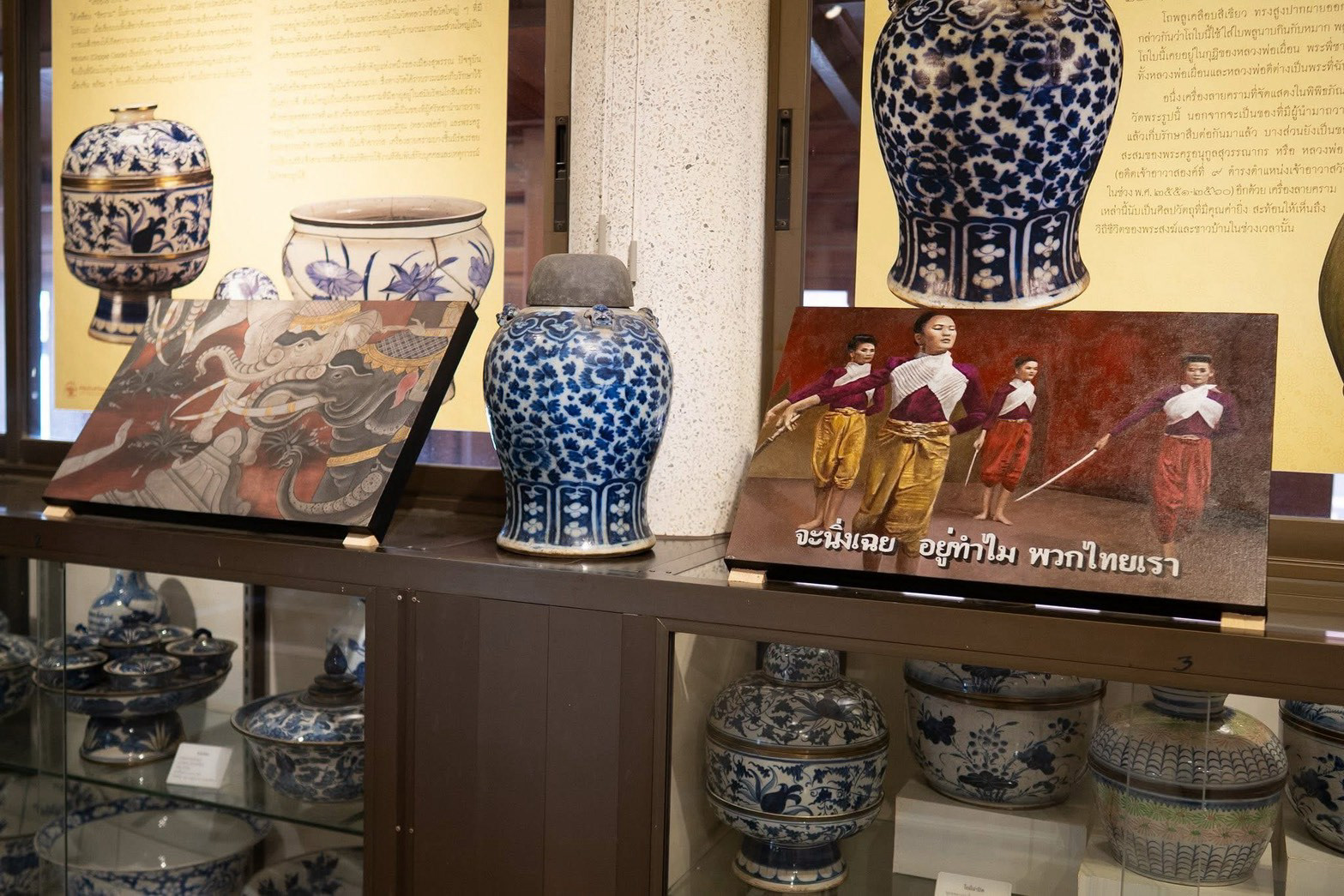
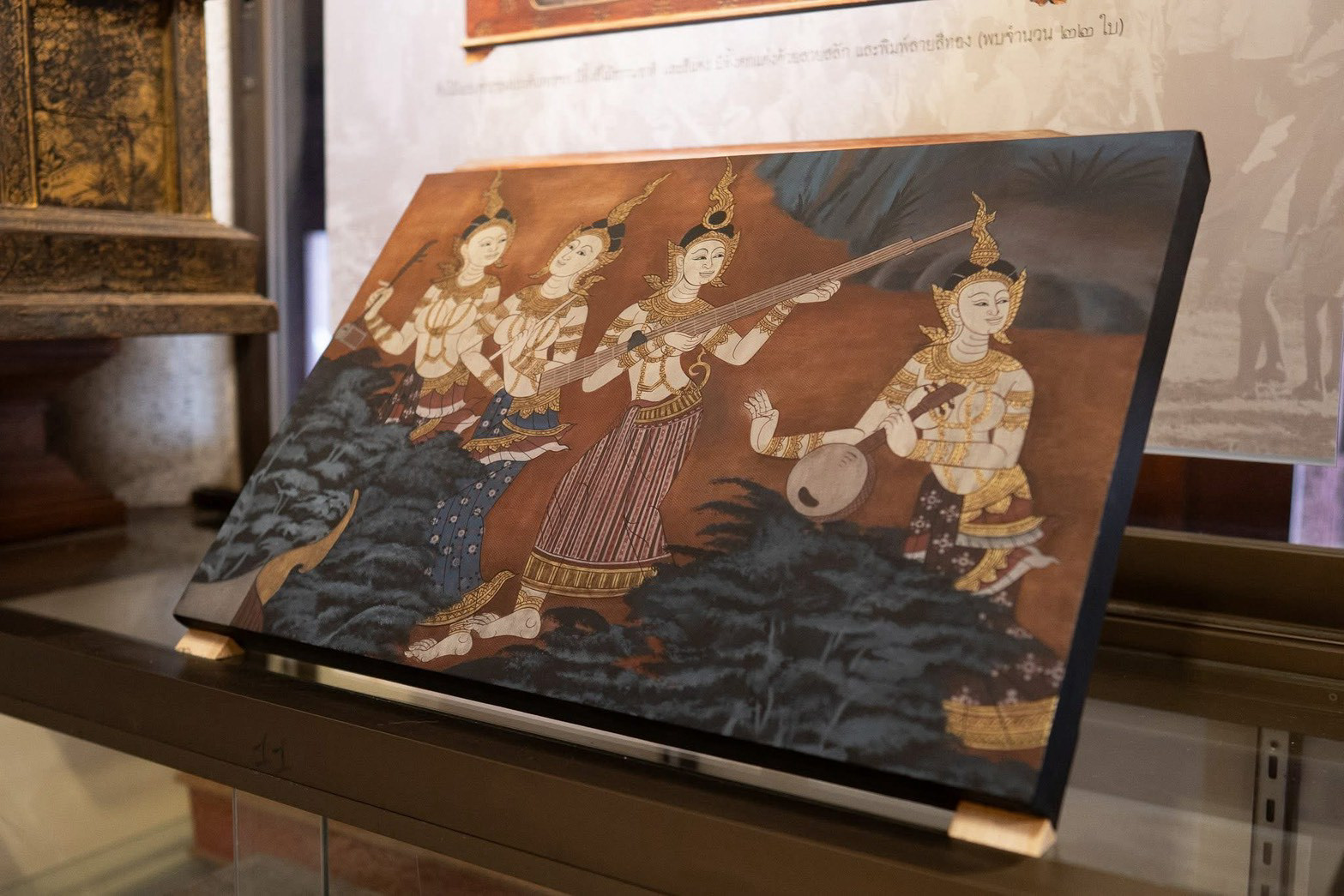
The Blood of Suphan (2025) presents five pairs of paintings that juxtapose mural images by Thongkham, the Vientiane-born artisan who painted Wat Pratu San and Wat No Phutthangkun, with scenes from the three film adaptations of The Blood of Suphan. By placing these images in direct dialogue, Chatu questions the constructed, front-facing image of "Thainess." While Thai mural traditions were shaped by the labor of displaced foreign artisans, the films portray Thainess as untouched by otherness, projecting an imagined national homogeneity that obscures long-standing ethnic diversity.
The work challenges conventional ways of seeing and asks how power shapes visual perception. It opens a space for overlooked memories to resurface and invites viewers to reconsider how images, ideology, and collective memory are continually formed and reinforced.
The work challenges conventional ways of seeing and asks how power shapes visual perception. It opens a space for overlooked memories to resurface and invites viewers to reconsider how images, ideology, and collective memory are continually formed and reinforced.
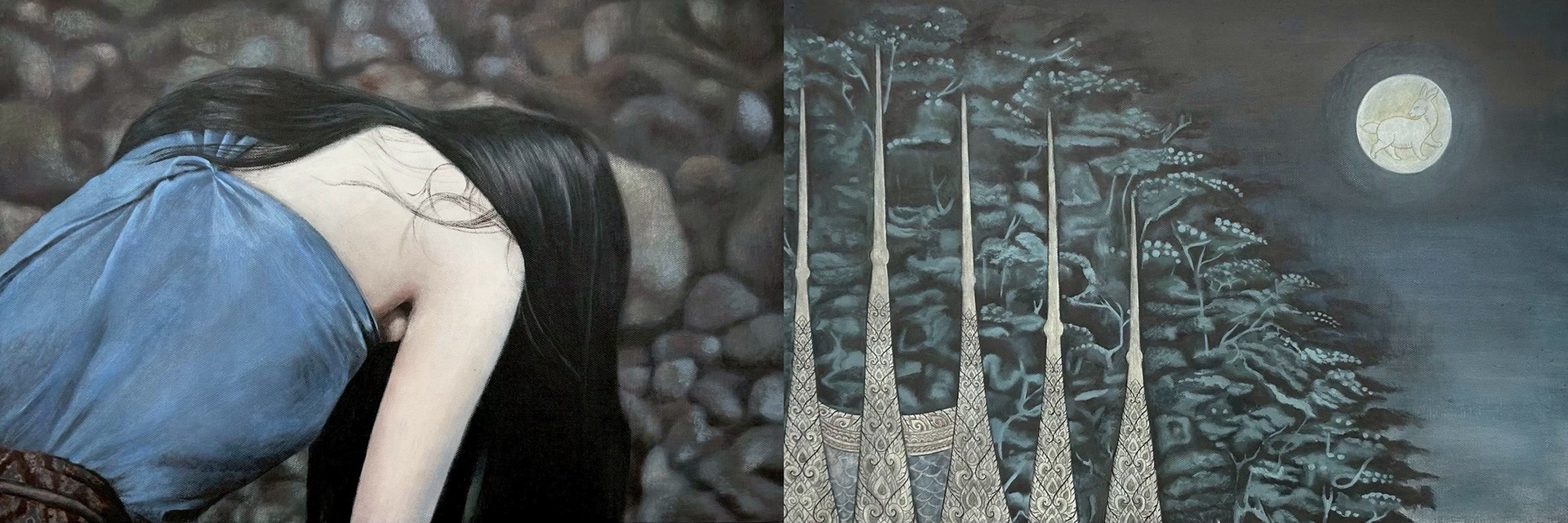
DUANGCHAN, THE MOON, Acrylic on canvas, 40x120 cm (diptych)

LET COMPASSION DWELL WITHIN THE HEART, Acrylic on canvas, 40x120 cm (diptych)
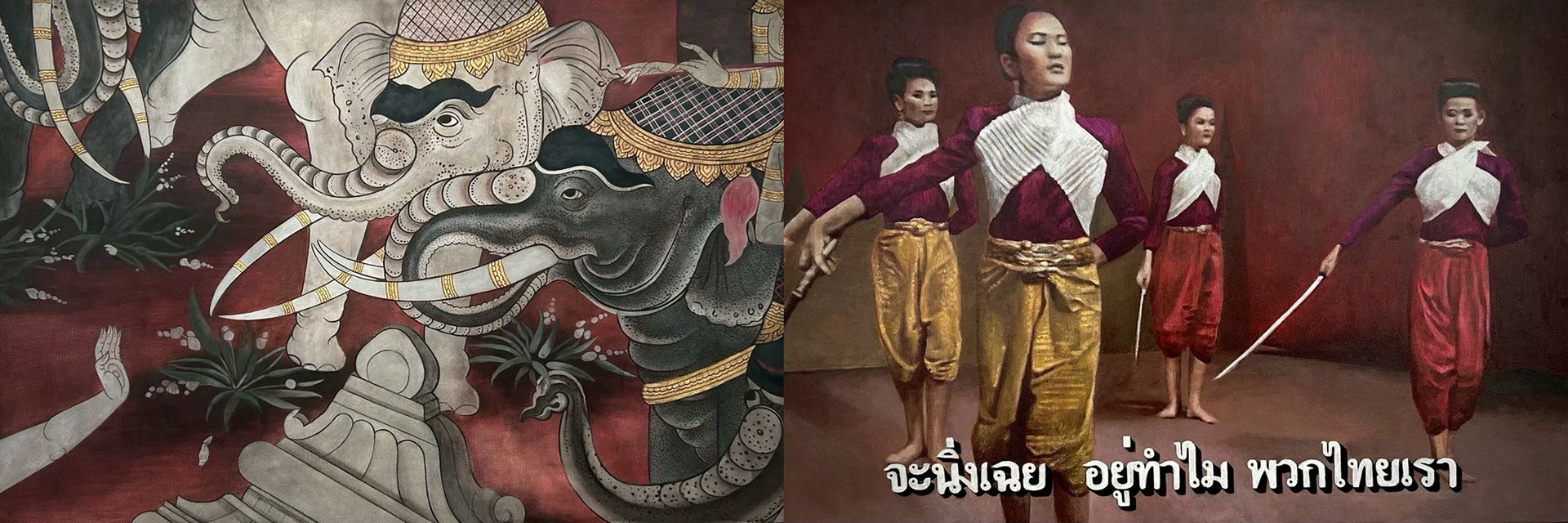
WHY SHOULD WE, THE THAIS, REMAIN SILENT?, Acrylic on canvas, 40x120 cm (diptych)

THIS LAND IS OURS, NOT OTHERS, Acrylic on canvas, 40x120 cm (diptych)
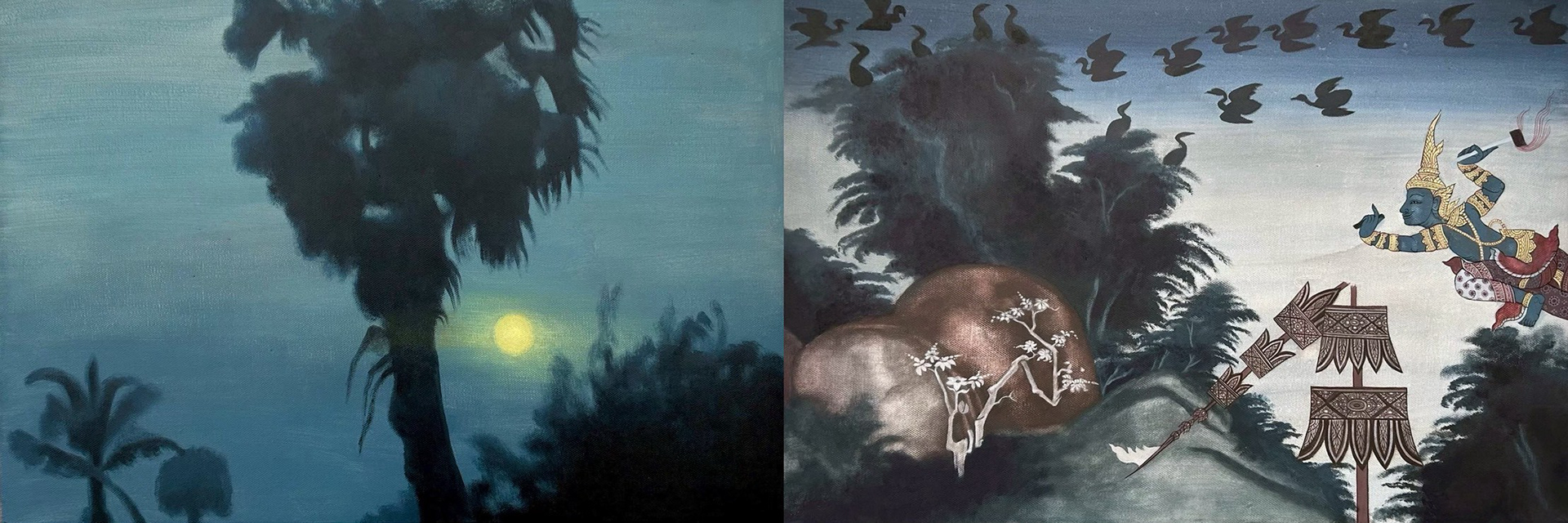
MAY GODS AND GUARDIANS SHIELD THIS HOMELAND, Acrylic on canvas, 40x120 cm (diptych)
Blood of Suphan Series: Appropriation and Juxtaposition as a Critical Re-reading of Nationalist Visual Culture
Blood of Suphan is a series of five diptych paintings that recontextualize and confront the visual residues of Thai nationalist discourse across centuries. Each diptych appropriates and juxtaposes two pictorial registers: first, details from traditional mural paintings found at Wat Nor Phutthangkun and Wat Pratusarn—masterpieces by Thongkham, a Lao artisan forcibly relocated during the suppression of Chao Anouvong's rebellion in the reign of King Rama III, whose work also adorns Bangkok's Wat Suthat; second, iconic imagery from three incarnations of Blood of Suphan (Lueat Suphan): Cherd Songsri's 1980 Cold War-era film, a state-produced dance performance video used in Thai school curricula, and the 2019 television adaptation commissioned by the Safe and Creative Media Development Fund under the Ministry of Culture during the NCPO military government, aired on Army Channel 5.
The tension within each pair is both aesthetic and political. Thongkham's murals, so often heralded as paragons of 'Thai traditional painting,' in fact embody a palimpsest of forced cultural amalgamation: Lao craftsmanship repurposed as Thai heritage through a long history of military conquest and cultural centralization. Meanwhile, Blood of Suphan—whether film, televised drama, or educational dance—functions as a reiterative propaganda artifact, disseminated and renewed whenever the state requires an affective vehicle to galvanize nationalist fervor and suppress pluralistic identities in favor of an imagined homogeneity.
This series thus exposes the performativity of 'Thainess' as a manufactured unity concealing a violent erasure of difference. The diptych form stages a collision: mural fragments that testify to involuntary migration and cultural hybridization meet mass media imagery purpose-built to deny such hybridity in the name of nationhood.
By reassembling these images side by side, Blood of Suphan invites viewers to confront the dissonance between the romanticized facade of 'Thai art' and the undercurrents of coercion, assimilation, and ideological reproduction that sustain it. Ultimately, the project proposes painting itself as a subversive historiographical tool: a means to destabilize canonical images, restore visibility to suppressed layers of identity, and interrogate the enduring entanglement between aesthetics, power, and the machinery of state-sponsored memory.